Mandatory Gas Time Alarm at beginning of the dive
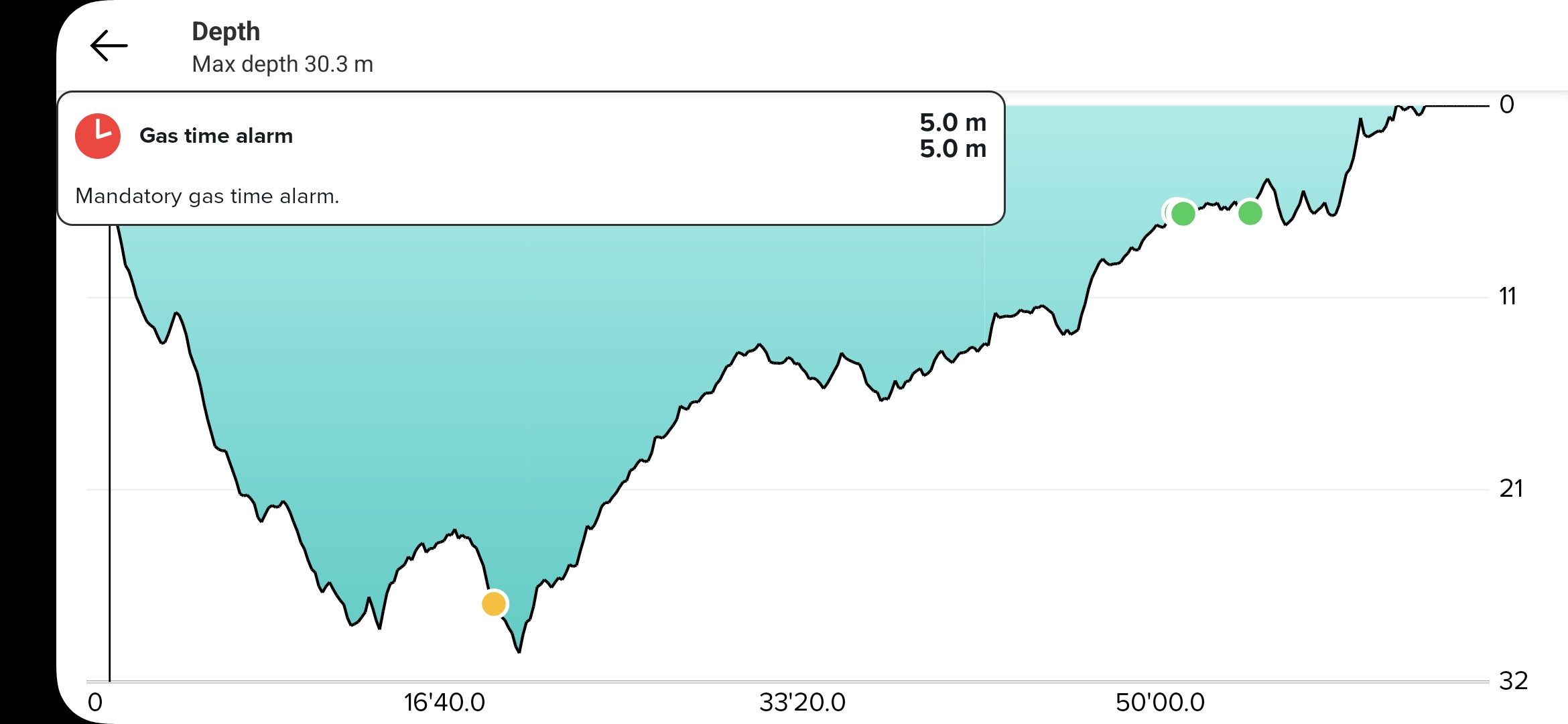
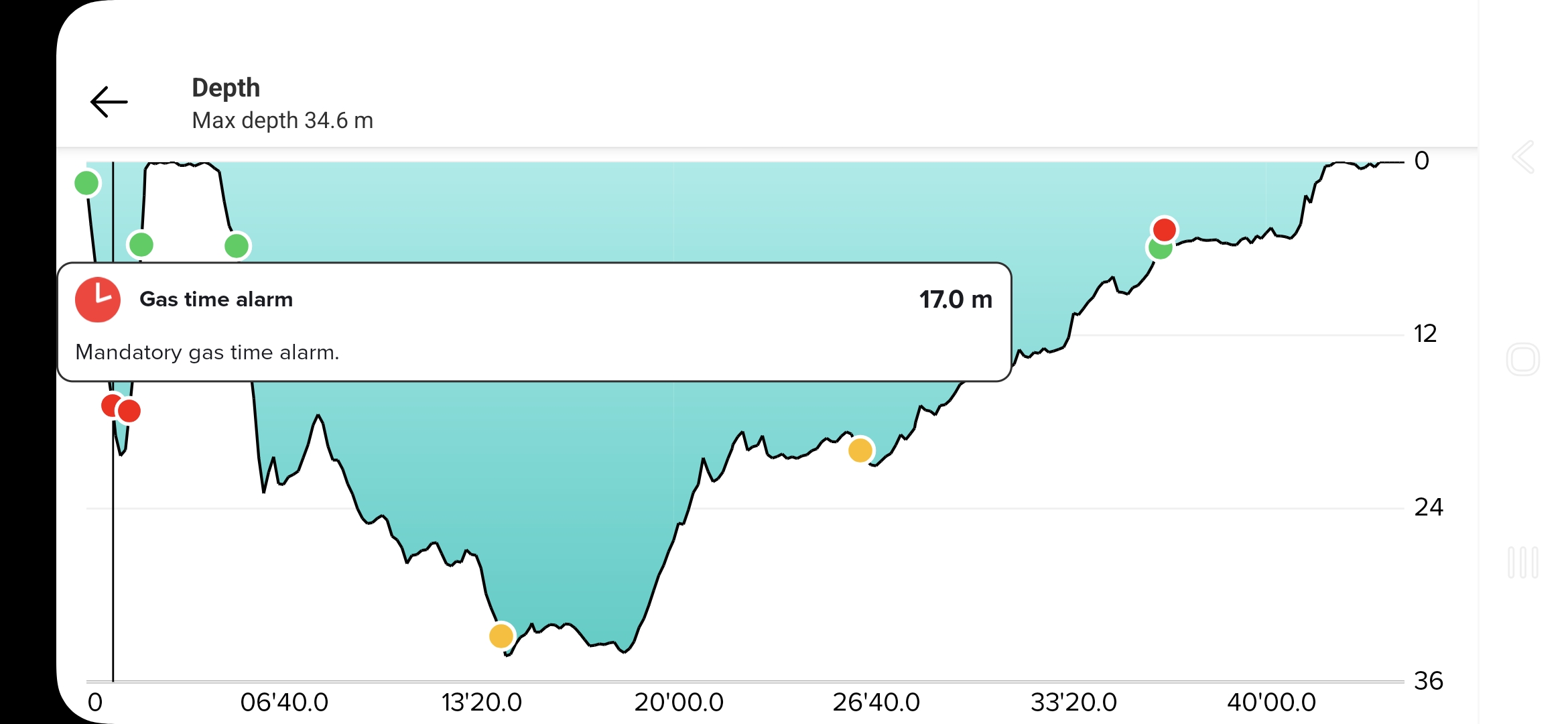
-
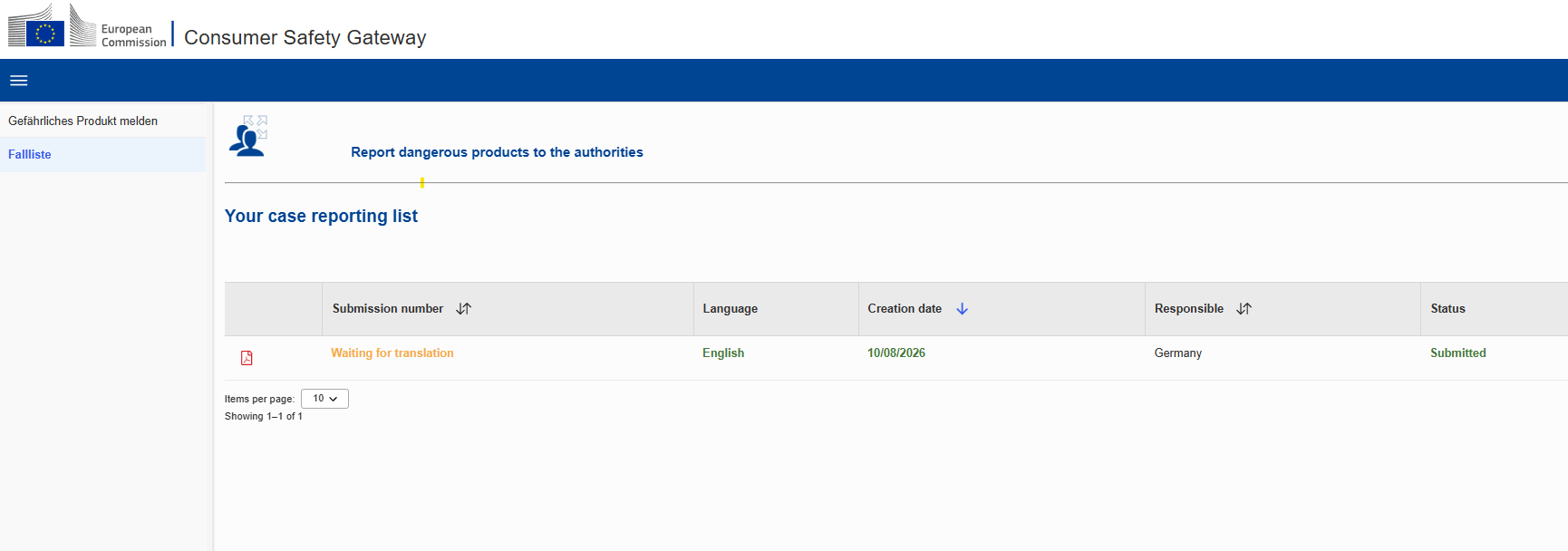
Since Suunto still shows no meaningful response and reports of Nautic issues keep piling up, I have now reported the Nautic through the European product safety system as a potentially dangerous product.
Given the false mandatory gas-time alarms and other incorrect dive data, I think an independent safety review is overdue.
I’ll keep you updated.
-
@hhouter I had the same issue this morning on my Ocean. Freaked me out a bit. I was 17.5m down, shortly after starting the dive. Interestingly looking at my gas consumption graph in the app, it spiked through the roof momentarily when the Mandatory Gas Time alarm fired. Definitely a bug
-
Since my latest findings, im starting to get a conclusion based on what I’ve observed (some of you might not be on the same opinion)
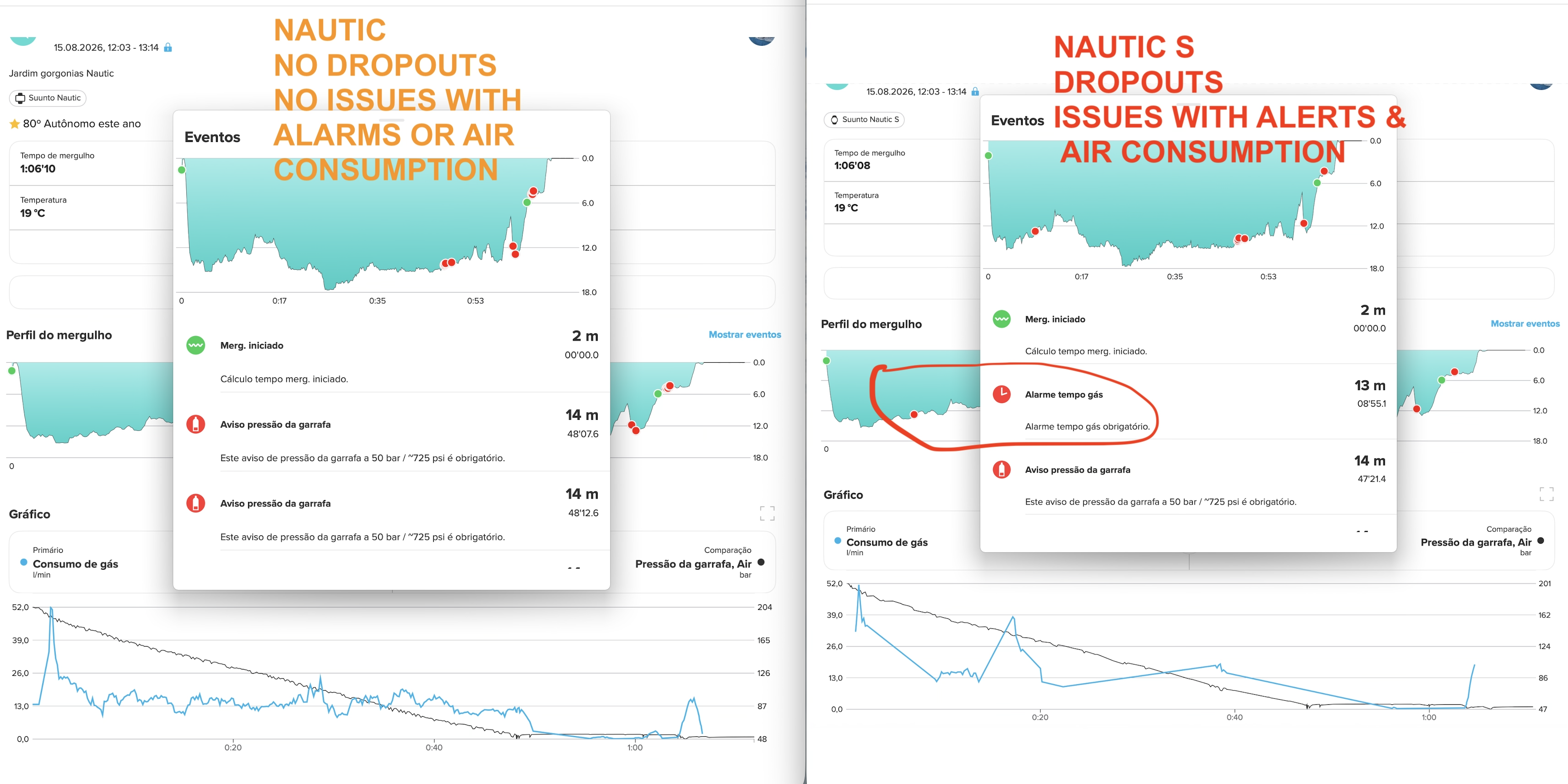
Nautic - No dropouts > No issues (air consumption or alerts)
Nautic - With dropouts > issues air consumption & alertsNautic S - No dropouts (sidemount ) NO ISSUES watch & transmitter are close by
Nautic S - with dropouts (backmount ) ISSUES since the watch is opposite side of transmitter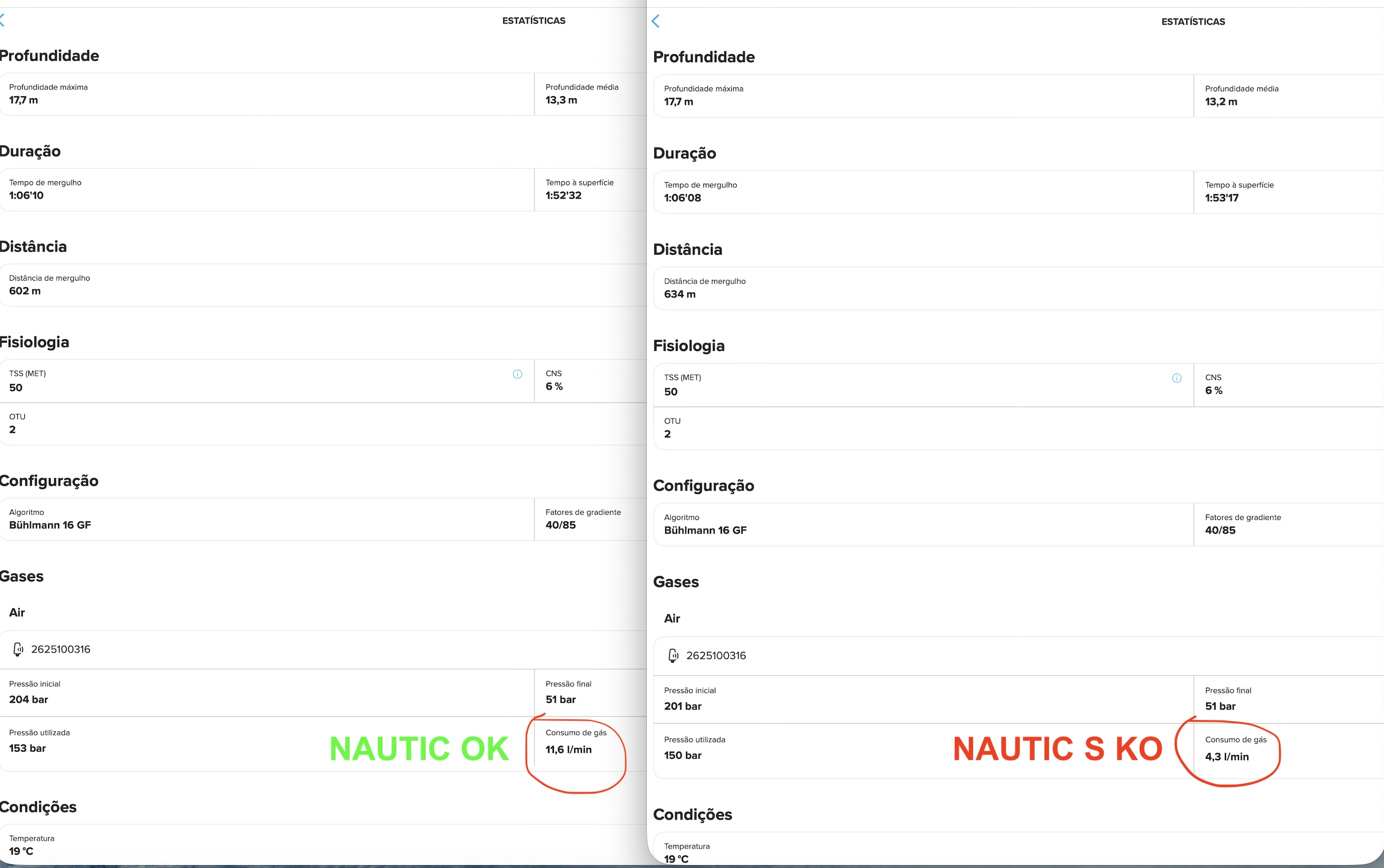
-
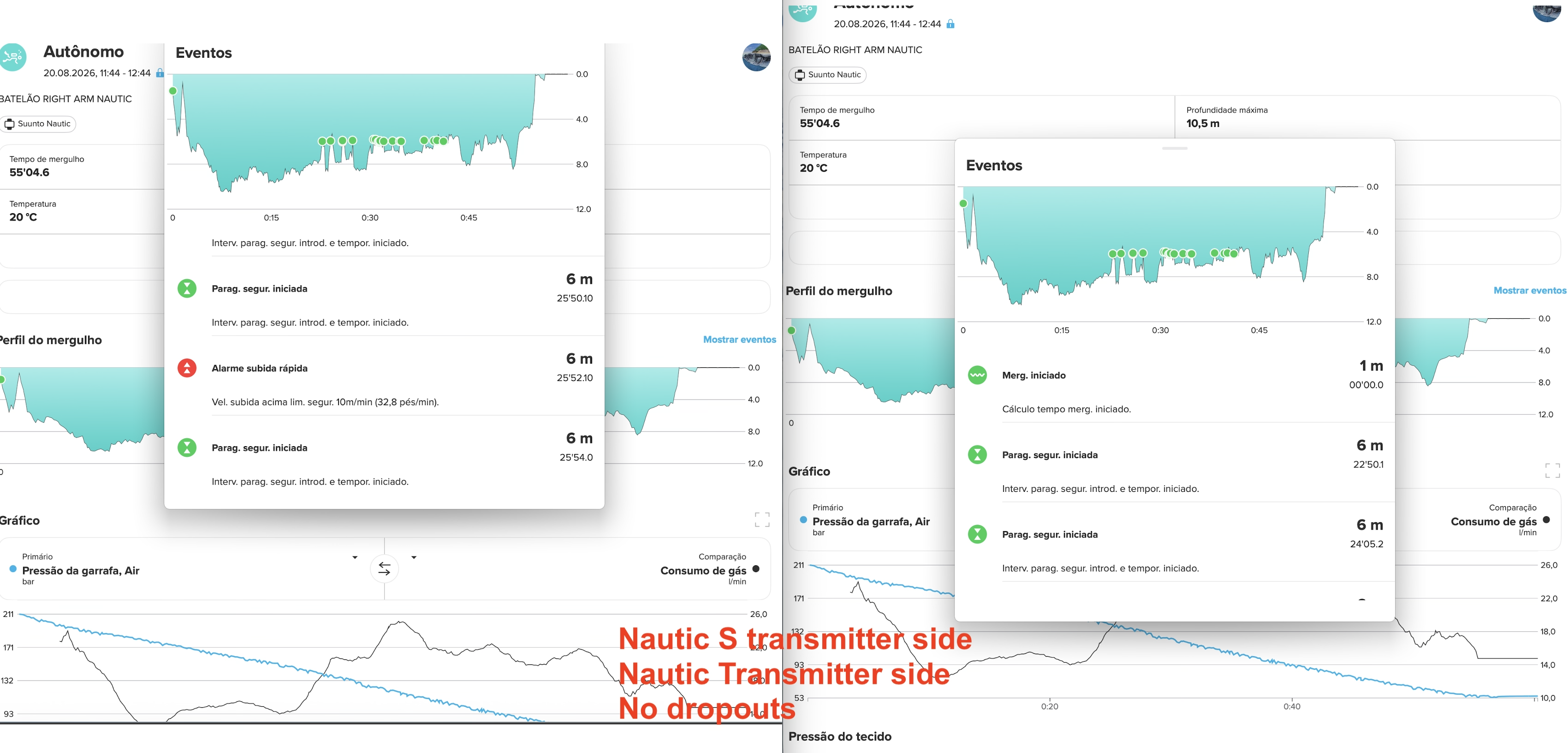
So did 2 dives this morning (maximum depth 11m)
Nautic - new firmware 2.55.46
Nautic S - 2.54.12
transmiter on Right SideAir consumption seems to be correct in Nautic & Nautic S
1st dive Nautic S had no dropouts or alerts (Left arm)
1st dive Nautic no droputs or alerts (right arm)2st dive Nautic S no dropouts or alerts ( right arm)
2st dive Nautic no dropouts or alerts (right arm)In more and more convinced the issues some people have are due transmitter bad connection with their computer, and is more noticeable at great depths
-
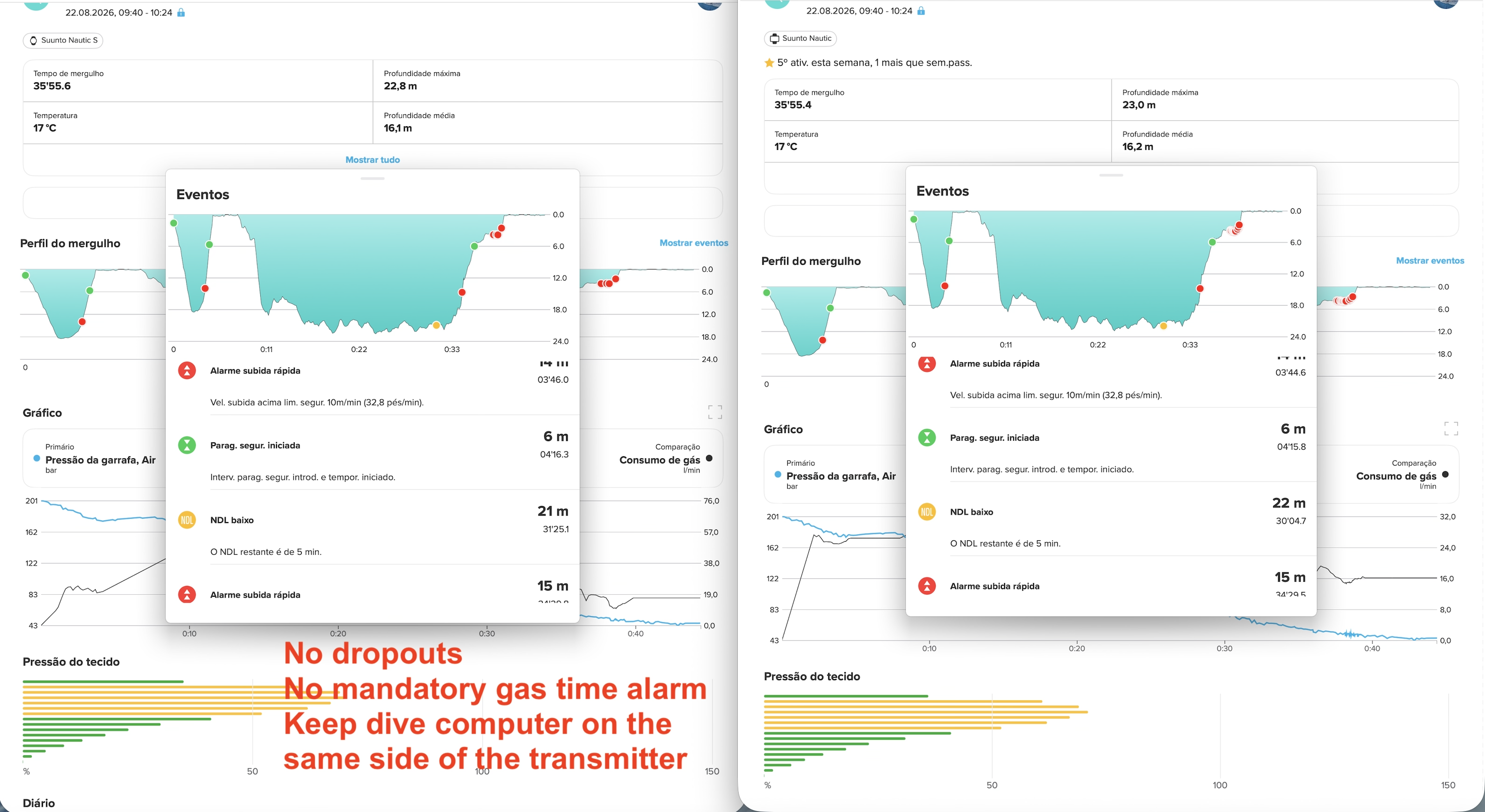
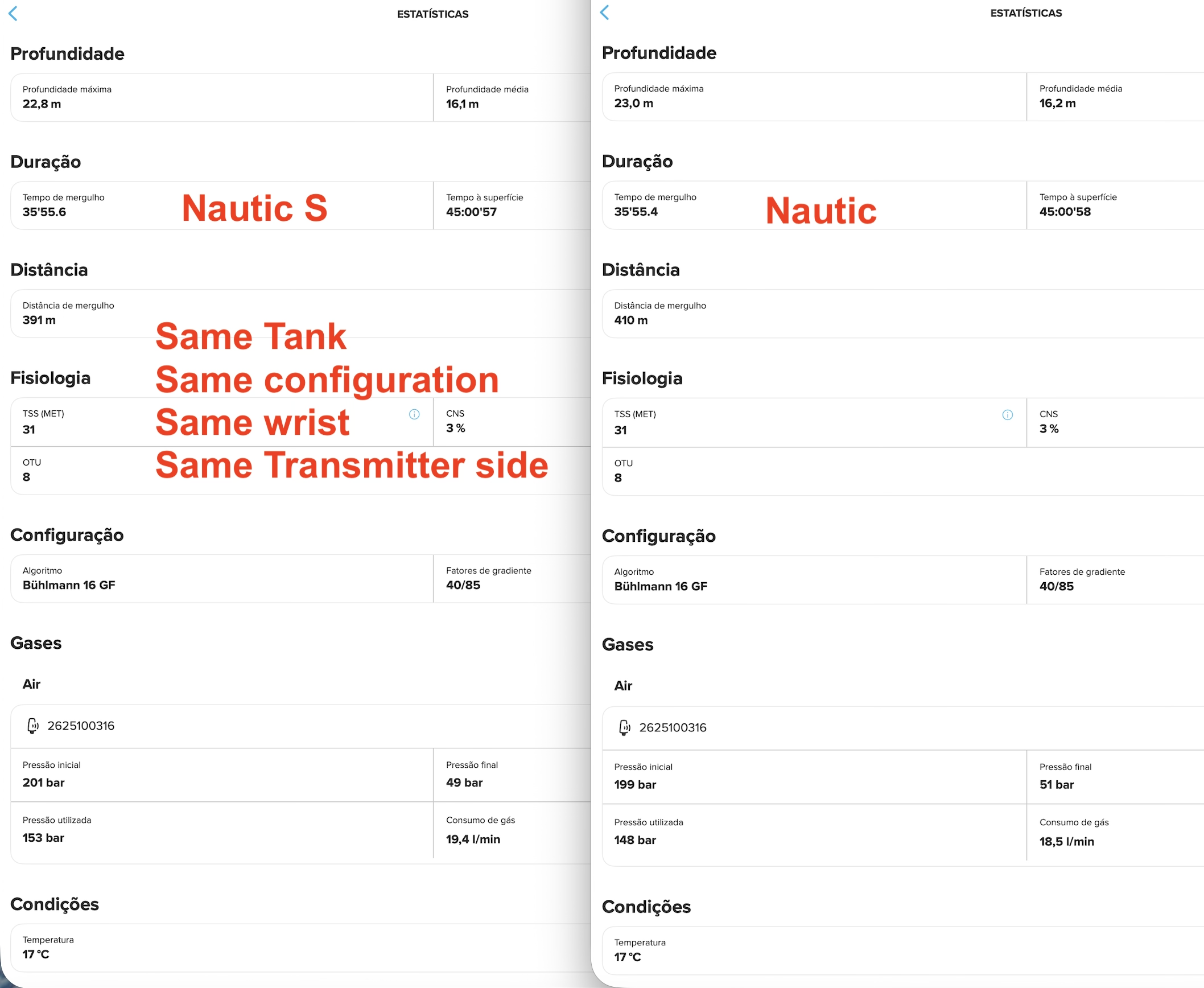
One more dive without dropouts and the Time gas alarm is nowhere to be seen
My findings and observations for that Time gas alarm at beginning of the dive is due the dropouts and bad connection between dive computer and the transmitter…
Doing sidemount never had issues or bugs, with backmount i use both computers on the same wrist…
Even the air consumption was very similar in Nautic /Nautic S
-
This tips comes from several dive computers manufactures to avoid Dropouts…
When a dive light causes a wireless tank transmitter to drop its signal or fail underwater, it is usually due to electromagnetic interference (EMI) or radio frequency interference (RFI) emitted by the light’s internal LED driver circuit, or a shared power drop if batteries are critically low.
TIPS
Increase Distance: Keep your primary dive light mounted on your Goodman handle or hand, well away from the tank transmitter on your first stage or the computer on your wrist.
Check Batteries: Swap or fully charge the batteries in both the dive light and the transmitter. Low voltage changes the operating frequency and output power of electronic circuits, making them much more susceptible to noise and drops.
Use a HP Hose Extension: Move the transmitter off the direct port of the first stage using a short high-pressure hose extension. This clears physical and electronic blind spots.
Upgrade Gear: Switch to a high-quality, name-brand dive light with certified electromagnetic compatibility (EMC) shielding, or service/replace an aging transmitter.
My dive lights usually are:
2x Divevolk LS50 ( video lights mounted on Gopro) away from transmitter.
1x Wurkkos LS05 ( torch bolt snap attached to Nautic Bungee cord)
1x Prozhaozhu ( strobe beacon bolt snap attached to Nautic Bungee cord)Curious: coincidence or not, when i stop using cheap TDS DZENOT backup light the dropouts stop
-
@jozzz999 I did a comparison of two similair dives with the Nautic different firmwares (Claude AI). Location, depth anf time are moreless the same.
Comparing the two logs (same device, firmware upgraded from 2.49.32 on Aug 9 to 2.55.46 on Aug 23):
Structure is the same — both nest
Ventilationinside eachCylinders[]entry, mixed in withPressure, on the gas-0 (main tank) samples. No schema change there.But the logging pattern changed noticeably:
Aug 9 (fw 2.49.32) Aug 23 (fw 2.55.46) Gas-0 samples 474 473 Both Pressure & Ventilation in same sample 465 (98%) 421 (89%) Pressure logged, Ventilation null 5 42 Ventilation logged, Pressure null 4 10 Zero-ventilation readings 5 10 Value range (nonzero) 0.000137–0.000554 0.00014–0.000529 Key differences:
-
Co-logging dropped off. On the older firmware, pressure and ventilation were almost always reported together in the same sample. On the newer firmware, they’re split apart much more often — 52 samples (11%) carry only one of the two fields, versus 9 samples (2%) on the older version. The measurement range itself didn’t change, just how consistently both values land in the same record.
-
Twice as many zero-dropouts, despite nearly identical sample counts (474 vs 473). That suggests the newer firmware either drops more ventilation samples or is more prone to zero readings at depth.
-
Dropout clustering differs. Aug 9 has one back-to-back double-dropout (two zeros 2 seconds apart at 29 m — the deepest point of that dive). Aug 23 has no back-to-back zeros, but its 10 dropouts are spread more broadly across the whole dive, including two right at the surface near the start (depth ~1.2 m, where a zero reading is plausible rather than a fault).
Takeaway: the underlying ventilation calculation looks stable (same value range, same warm-up delay before the first reading appears), but the newer firmware is logging it less reliably alongside pressure and dropping to zero roughly twice as often — worth flagging as a possible regression if you’re tracking data completeness across firmware versions.
-
-
This is the log comparison for the Nautic and the EON Core on the same dive this morning 23/08/2026 +/- 9 AM. I didn’t sync the EON Core before the dive, that explains the hour difference as last dive was in the winter.
NOTE:
- 1 Single POD (Left on my 1st Stage)
- Nautic (New Firmware) on my Left Arm
- EON Core on my right arm
That’s the real story here — these two logs are from two entirely different dive computers, not the same device on different dives. That changes what “logging accuracy” comparison actually means.
Device identification:
09:01:45 file 08:01:49 file Device “Vaasa” (Suunto-style), SW 2.55.46 “EON Core”, SW 4.0.1131 Serial 254610001470 1953100087 Schema Nested — VentilationinsideCylinders[], alternating withPressureFlat — Ventilationas its own top-level sample fieldVentilation logging accuracy:
Metric Vaasa (09:01) EON Core (08:01) Ventilation coverage 431/473 (91.1%) 422/446 (94.6%) Pressure & Ventilation co-logged in same sample 89.0% 94.4% Zero-value (likely dropout) readings 10 (2.3% of present) 0 (0.0%) Sample interval consistency 0–10.2s (one 0.0s duplicate) 9.8–10.0s, very tight Timestamp gaps >15s 0 0 Nonzero value range 0.000140–0.000529 0.000133–0.000555 Assessment:
- The EON Core log is more accurate/reliable: higher ventilation coverage, tighter and more consistent co-logging of pressure with ventilation, zero dropout events, and a cleaner sample cadence.
- The Vaasa log has real data-quality issues: 10 zero-ventilation dropouts mid-dive at depth (physiologically implausible), a lower field-coverage rate, and a stray 0.0-second duplicate timestamp — all consistent with the sensor/logging quirks flagged in the earlier Vaasa-only analyses.
- Both devices measure ventilation on the same order of magnitude and unit scale, so the underlying sensor readings are comparable — the difference is purely in how completely and cleanly each device logs the field, not in what it’s measuring.
Bottom line: if you’re trusting ventilation data for analysis, the EON Core’s log is the more accurate/complete of the two; the Vaasa log needs the dropout samples filtered or interpolated before use.
-
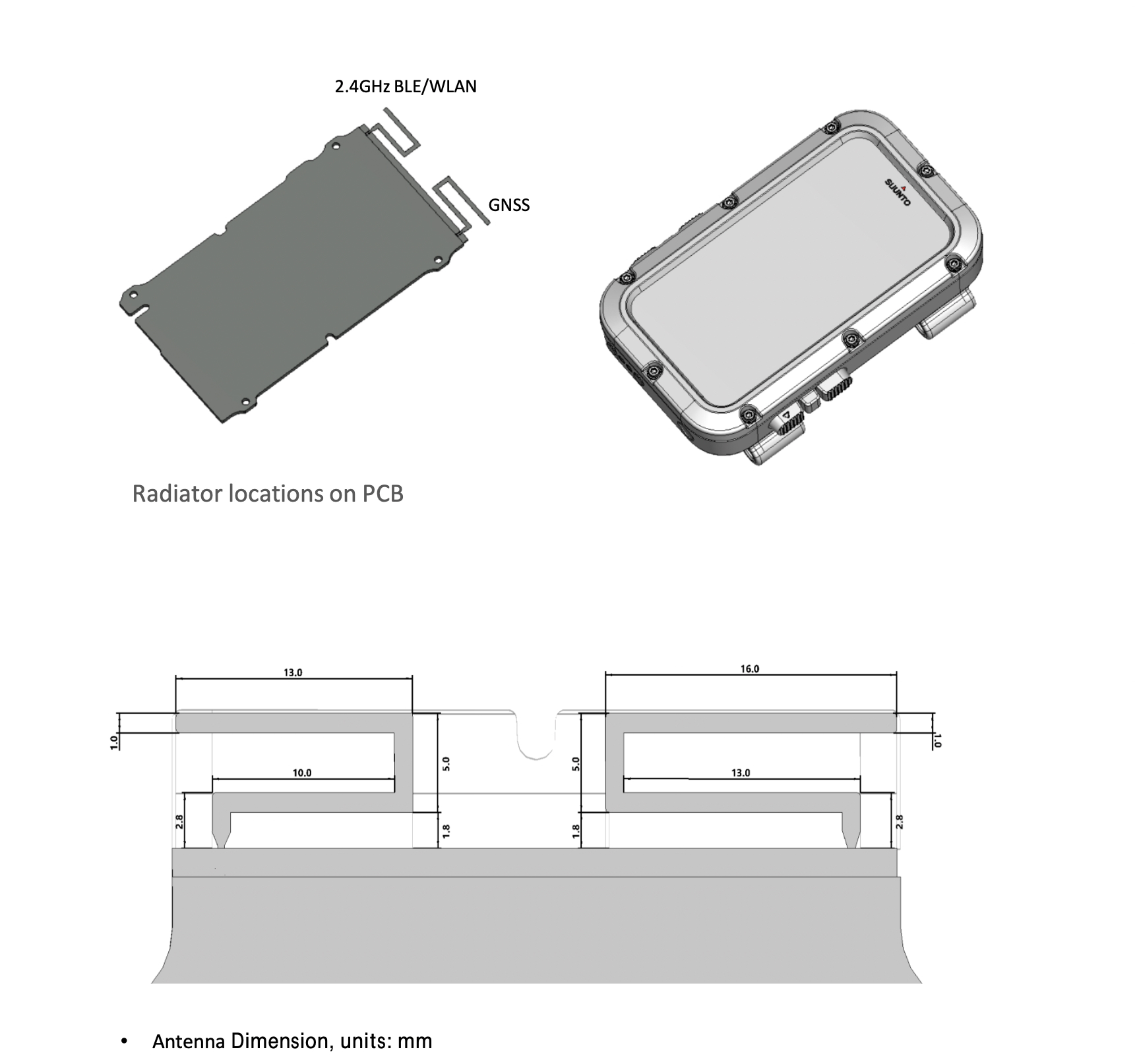
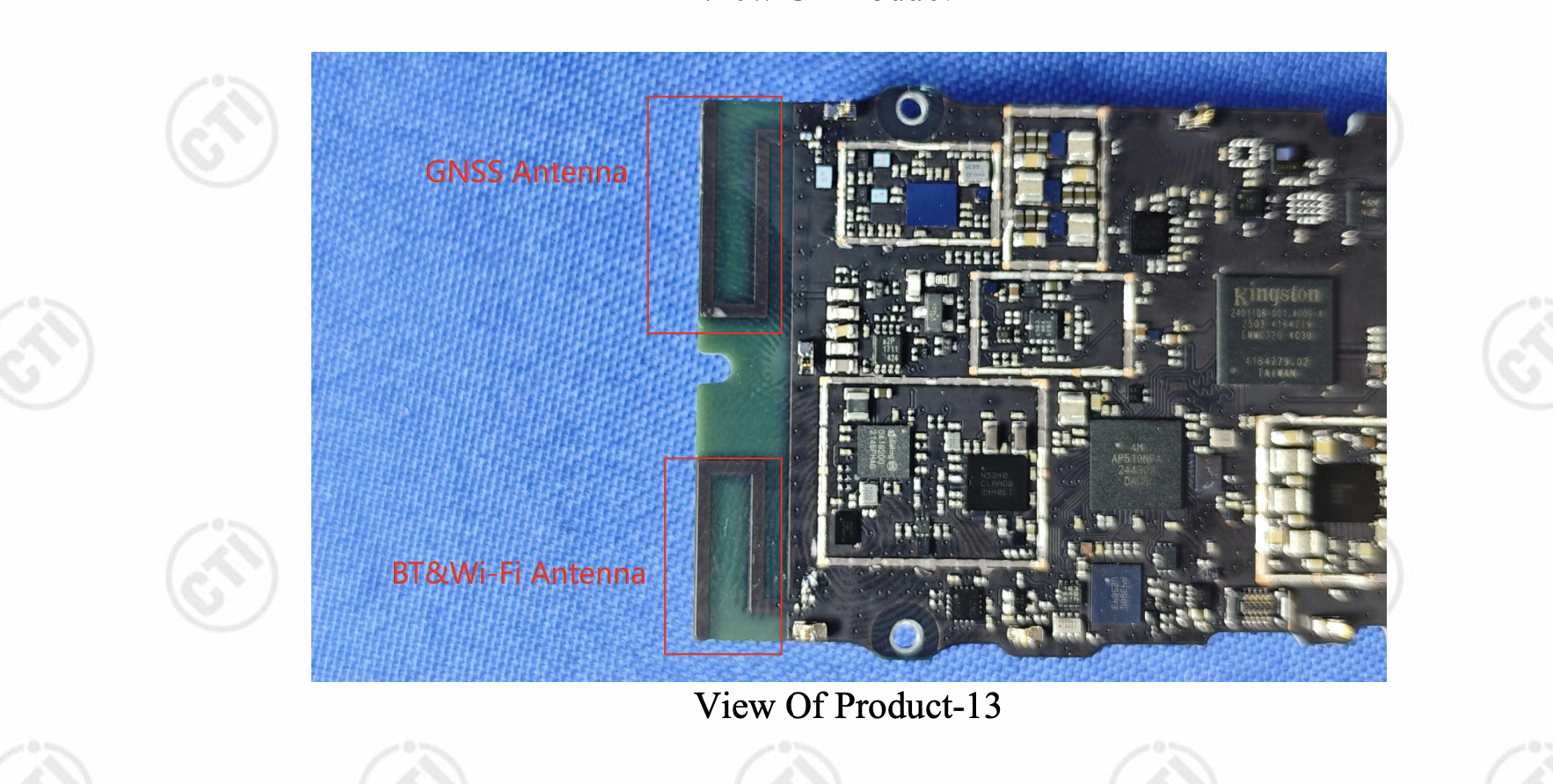
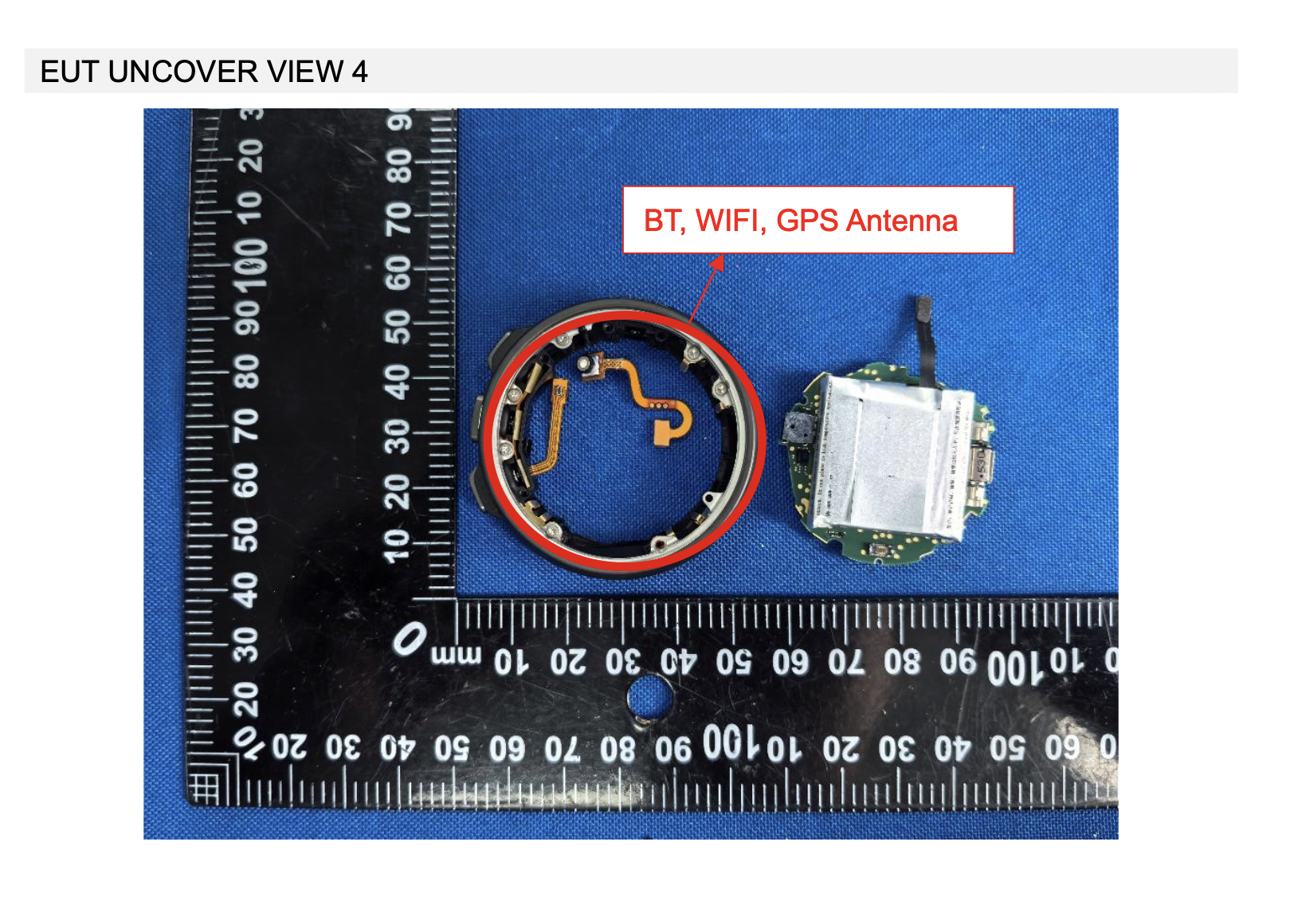
The Nautic & Nautic s are very recent models, and i couldn’t find any diagram disassembly of the antenna location, the best i could find is FCC, not all photos are available due confidentiality.
Suunto Tank POD
Tank POD uses an inductive frequency for wireless transmission — serious enough that Suunto warns pacemaker wearers should consult a doctor, as the inductive frequency used by the device may interfere with pacemakers. This tells you the Tank POD isn’t a standard RF broadcast like the older transmitter — it relies on a short-range inductive/magnetic near-field link between the POD and the wrist computer, which behaves differently from RF interference.
Dive lights SL50
It uses an 18mm movie-grade COB LED pushing up to 5,600 lumens — that’s a high-current driver by dive light standards (recreational focus/video lights like this usually pull several amps at full power).
It has 9 adjustable brightness levels and a stepless dimming variant in some listings — stepless/multi-level dimming on LED drivers is almost always done via PWM (pulse-width modulation) or a switching buck/boost regulator, both of which are common EMI sources. High-current COB drivers running PWM at various duty cycles are exactly the profile that tends to radiate broadband switching noiseFrom does FCC ID diagrams the Nautic seems to have antenna at opposite side of the buttons…
NAUTIC
in my opinion its better to use Nautic on right arm and transmitter on right side…so that the antenna stay in direct line of sight with transmitter.NAUTIC S/ OCEAN
in my opinion is keep both dive computers with line of sight with transmitter, the antenna wifi/blu is 360… (i had compass blocking the Nautic S line of sight)Regarding the dive lights, anyone can do the test, and apply different power modes very close to the dive computer… im certain that will cause dropouts…
-
On this backmount configuration i had situations with dropouts (Transmitter on the right side)
Left wrist ( compass + Nautic S) and 2x video Dive lights on tray
right wrist (Nautic ) Dropouts and 2x video Dive lights on tray
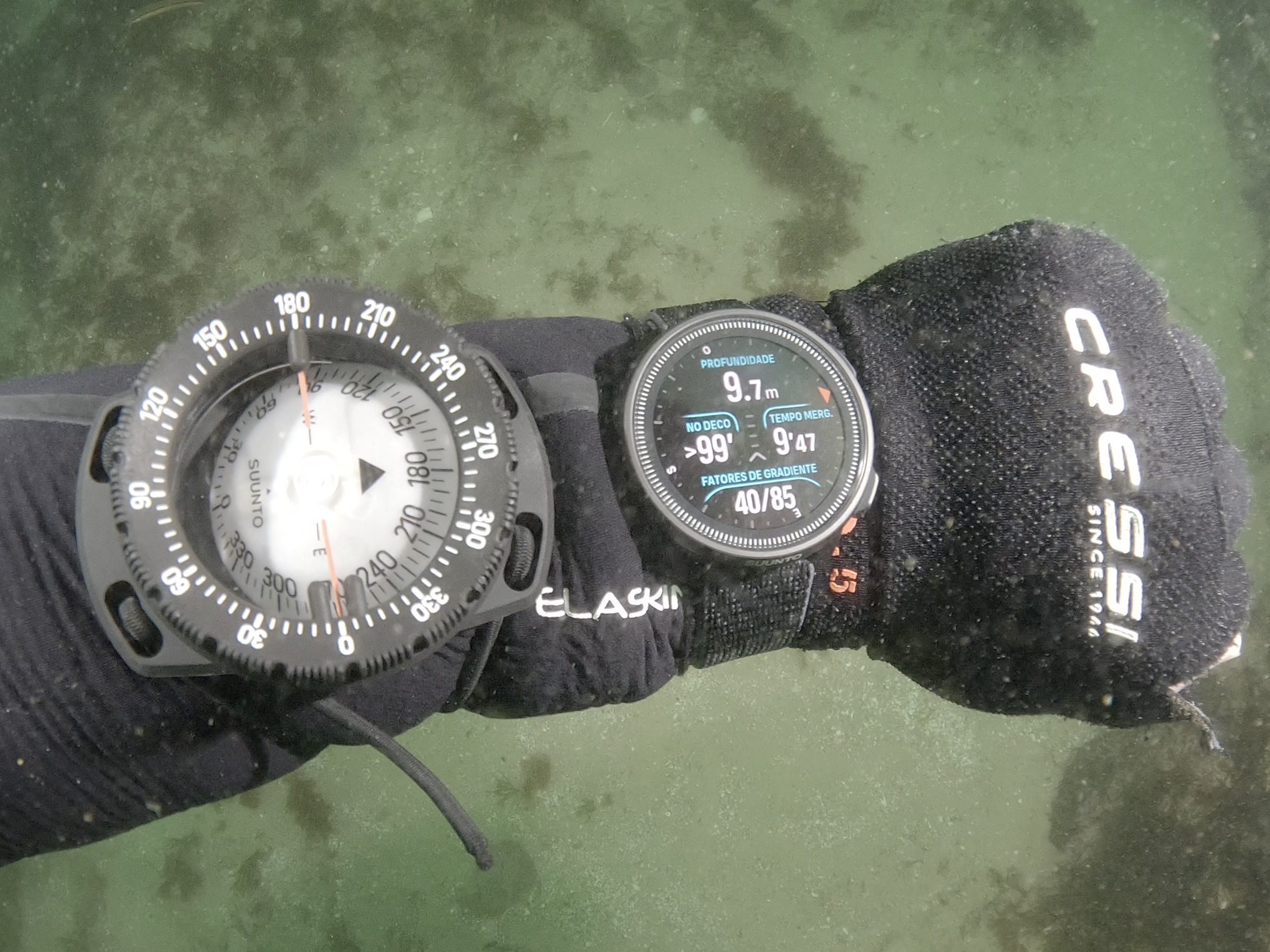
On this backmount configuration i had wrong SAC readings on Nautic S (Transmitter on the right side)
right wrist (Nautic S ) wrong SAC readings + 2x video Dive lights on tray.
right wrist (Nautic + Nautic S ) no dropouts or wrong SAC readings without Dive lights.
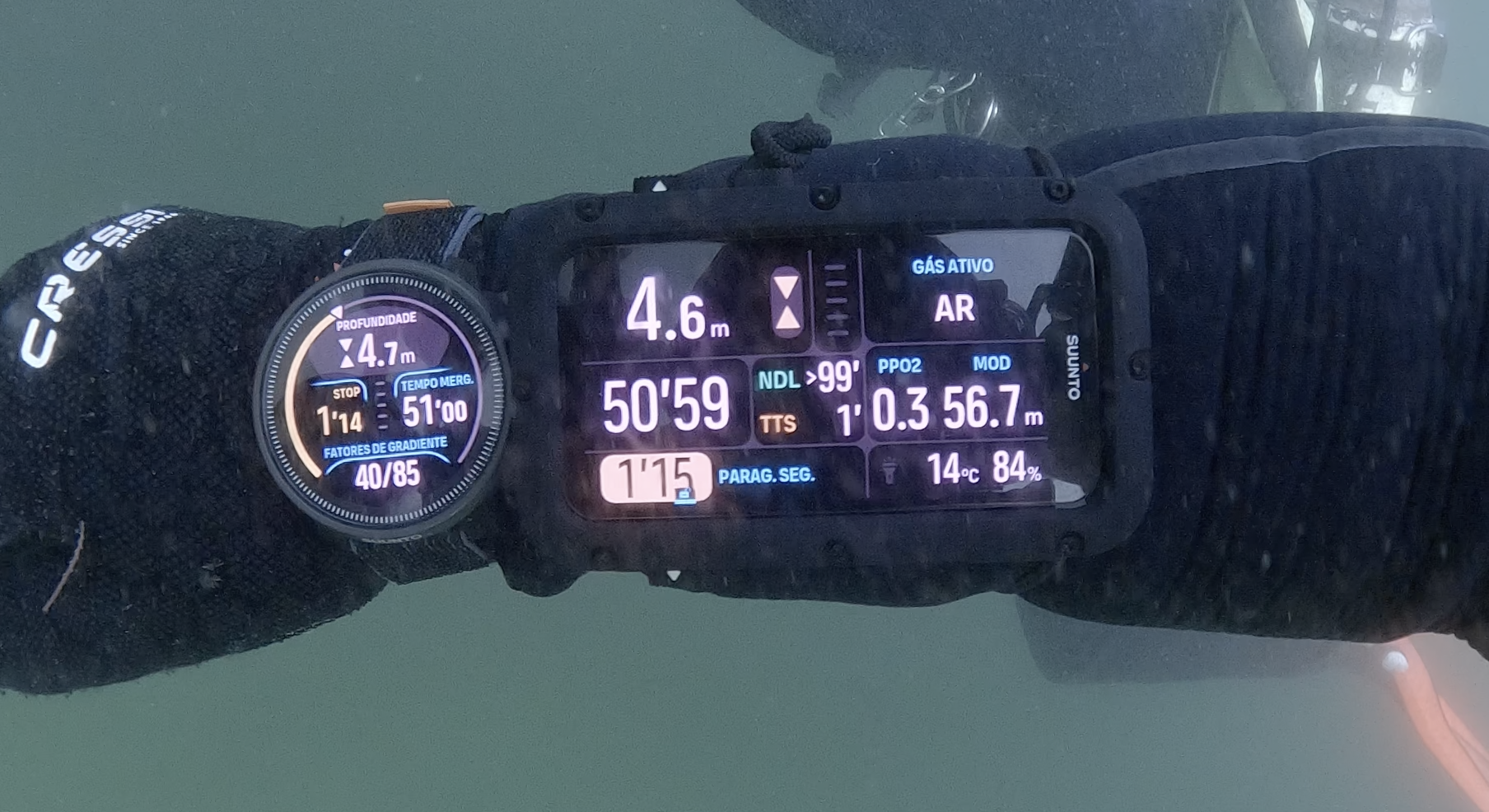
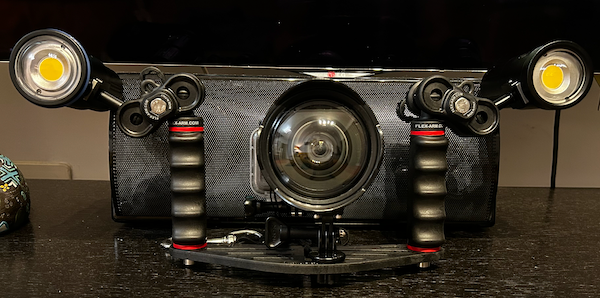
This my video gear for scuba, so you can have an idea, the video lights are very close to the wrist
Hello! It looks like you're interested in this conversation, but you don't have an account yet.
Getting fed up of having to scroll through the same posts each visit? When you register for an account, you'll always come back to exactly where you were before, and choose to be notified of new replies (either via email, or push notification). You'll also be able to save bookmarks and upvote posts to show your appreciation to other community members.
With your input, this post could be even better 💗
Register Login