Offline Maps and Routing in Suunto App
-
@Tomas5 said in Offline Maps and Routing in Suunto App:
For map primary focused for sport. It show too much parking.
True, yet it’s about trade-offs.
I agree that it could be too many parkings in the city, but the focus is to have best features for outdoor environment rather than the city.In this specific case we have different approach to how treat OSM parking. We filter out all parkings that explicitly marked as private (as it should be in my opinion for majority of parkings you showed on your screenshots), while Mapy.cz filters out all parkings that do not have some explicit tags that it’s public/fee n etc.
This is a trade off between too many parkings in the city andmissing parking somewhere in the outdoor.The same goes with the bars for example. I think it’s useful to have a bar marked somewhere when doing a hike - because it’s a source of water and food. But in the city there are likely too many of those.
I’ll think about it more, but also suggest for all users if its their neighborhood with many such parkings to go openstreetmap.org and map them as
access: privateOpinions expressed are solely my own and do not express the views or opinions of my employer
-
@pavel.samokha I think mapping parking spaces with access:private won’t work for all cases.
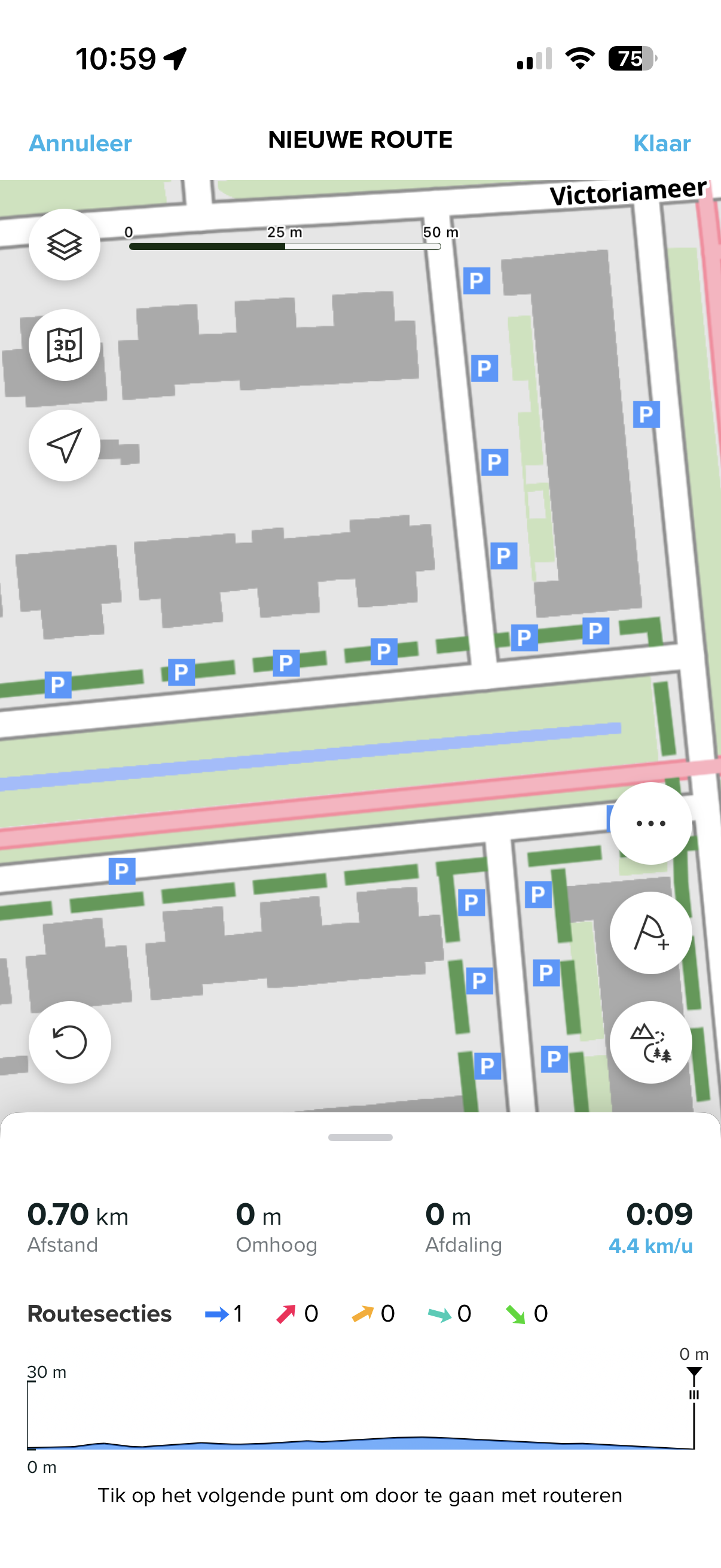
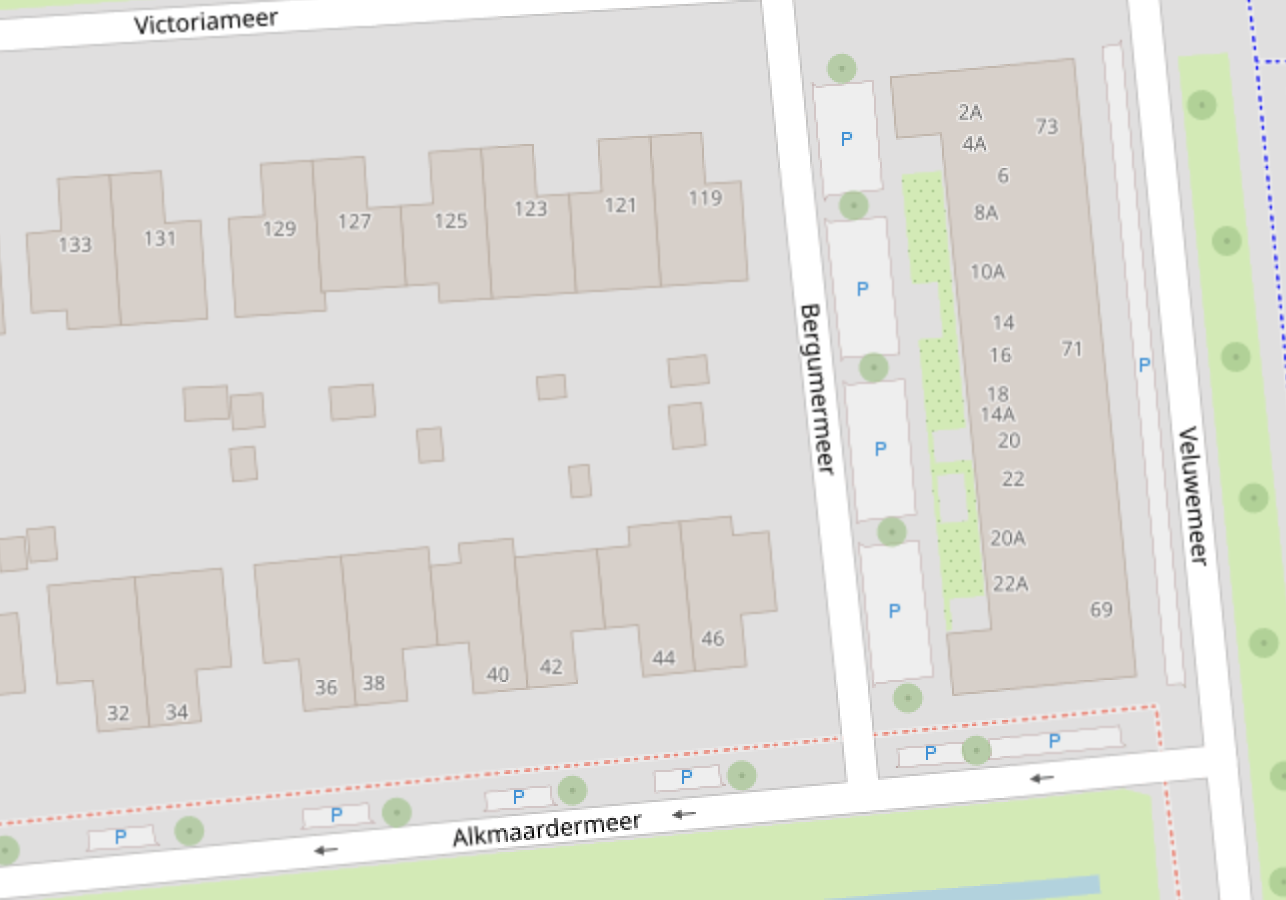
For example in the neighborhood where I live there are a lot of public parking bays along residential roads that can be used by anyone, but are primarily used by people living in that street.
In some areas mappers micromap these parking bays in OSM as amenity:parking and parking:street_side (or similar tags) which, although correct according to OSM guidelines, can result in a lot of P icons depending on the map renderer. In other areas these parking areas are not mapped at all.
See for example these two screenshots:
Suunto App (iOS) offline map:
OpenStreetMap:
-
@pavel.samokha thats problematic becuse it is public parking. Anyone can park there. Because it is parking next to street that goes around block of apartment buildings. Something like this https://maps.app.goo.gl/J3GBjXj7RHkzkM8s8
At least mapy.com show this parking too but only on much greater zoom level.
Suunto Ambit 2 > Suunto 5 > Suunto Race 2
-
Great update!
One thing I noticed is that routing behaves differently on offline maps vs online maps. When I use “All routes and trails mode” (not sure if it’s the right name, I use the app in Dutch), online maps will use cycleways for routing, but offline maps will not. When switching to “All types of roads” (again not sure what the English text is), the app will route over cycleways.
So a workaround is to switch between route modes when building a route, so that the planned route follows the paths and roads I want to.
Is this by design or is this possibly a bug?
-
@JungleJim said in Offline Maps and Routing in Suunto App:
Great update!
One thing I noticed is that routing behaves differently on offline maps vs online maps. When I use “All routes and trails mode” (not sure if it’s the right name, I use the app in Dutch), online maps will use cycleways for routing, but offline maps will not. When switching to “All types of roads” (again not sure what the English text is), the app will route over cycleways.
So a workaround is to switch between route modes when building a route, so that the planned route follows the paths and roads I want to.
Is this by design or is this possibly a bug?
Read here in this same thread #4: https://forum.suunto.com/post/188081
It is by design.
-
I just received version 6.8.9 for Android; I downloaded some maps to my phone and a few others to the app, but I don’t see anything in the app right after switching to offline maps (empty). I’m using light style if that matters. Sorry, I’m still trying to figure it out, so I’m probably missing something.
Edit: solved w/ a restart of the app.
Edit: tried in the wild right now. Lovely! -
@JungleJim @pavel.samokha i think solution can be to show parking only at greater zoom level like at 50m zoom level on watch or equivalent. Otherwise, the map is now overcrowded with informations.
Suunto Ambit 2 > Suunto 5 > Suunto Race 2
-
@Egika yeah I saw that (should have mentioned that).
“Offline and online routing engines are different. We tried to align them feature-wise, but they can produce different results. You may prefer one or another.”
My question is then more whether this is something that is supposed to be aligned between offline and online maps, or that it is one of the areas where different results are produced.
-
@JungleJim please show screenshots
-
@Tomas5 the reverse case is:
I’m somewhere in mountainous not very populated area and I’m searching where to park before going on a hike.
Quite likely there will be also a parking without any explicit tags. Putting it on highest zoom levels will be inconvenient - hard to find, as I will need to scroll a lot.
I’m not arguing it looking overcrowded in the city, but explaining the tradeoffs here. I will think what else we can do
Opinions expressed are solely my own and do not express the views or opinions of my employer
-
I was talking more about the cases like this:
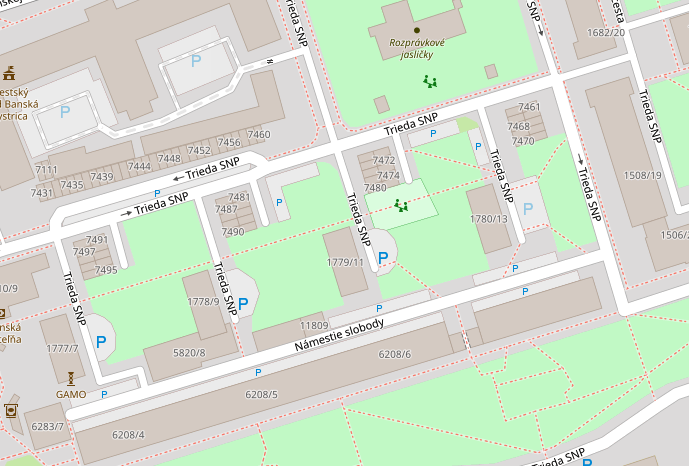
Out of central large P rightmost is marked as private, but three others are not. Hard to believe it’s public - I rather think it’s not tagged properly.
Opinions expressed are solely my own and do not express the views or opinions of my employer
-
@Tomas5 Offline maps are more useful in areas without coverage, so it’s better to have more information on the map outdoors.
In more populated areas, it’s still more convenient to use online maps. Except in places requiring roaming, but that’s definitely rarer. -
@pavel.samokha said in Offline Maps and Routing in Suunto App:
I was talking more about the cases like this:
Out of central large P rightmost is marked as private, but three others are not. Hard to believe it’s public - I rather think it’s not tagged properly.
Most of them is for residents only now. City converted it from public recently i believe.
-
@maszop yes in suunto app it is true. But if this labels will get into watch in some point, there is no such thing like online version. And rendering so much parking lots will make map in city harder to use. Maybe allow to display/hide this interest points. So i can for example keep restaurants but hide parking or vice versa. For example on Bike trip i am interested in restaurants and cafeteria but i will not look for parking lot when on bike.
-
@pavel.samokha said in Offline Maps and Routing in Suunto App:
@Tomas5 the reverse case is:
I’m somewhere in mountainous not very populated area and I’m searching where to park before going on a hike.
Quite likely there will be also a parking without any explicit tags. Putting it on highest zoom levels will be inconvenient - hard to find, as I will need to scroll a lot.
I’m not arguing it looking overcrowded in the city, but explaining the tradeoffs here. I will think what else we can do
Possibly yes. But if you plan trip by car to mountains. Usually you start in city so you can set navigation directly to parking spot you need. And i believe no one will ever use suunto app as car navigation. And for doing sport activity, parking is not important that much if you are not doing motosports.
Either way it is still better than blind map like currently in watch. So take this just as feedback for possible improvement.
Suunto Ambit 2 > Suunto 5 > Suunto Race 2
-
@Tomas5 said in Offline Maps and Routing in Suunto App:
@maszop And rendering so much parking lots will make map in city harder to use.
I always thought that people buy Suunto watches with maps to use them mainly outdoors, not to find the nearest café in city. But hey, I could be wrong

-
@maszop Absolutely. I especially need the contour lines of the terrain.

-
@Tomas5 said in Offline Maps and Routing in Suunto App:
So take this just as feedback for possible improvement.
Ofc. Thanks for feedback, always appreciated.
Maps is a particular area where feedback is important. Countries can vary a lot in the way they planned and mapped, no way for me to check everything.
And as I said earlier I know the style and data is far from perfect. When comparing our offline maps to an app which is being developed for 20 years by Czech company — it will obviously be better in Slovakia. At this time the goal was to make the technology, I hope we polish the looks down the road.
-
@maszop said in Offline Maps and Routing in Suunto App:
I always thought that people buy Suunto watches with maps to use them mainly outdoors, not to find the nearest café in city.
I know you’re just kidding, but I’d argue that it’s important that the maps function equally well in both remote and urban areas. For instance, when I visit a new city, if possible, I begin my trail runs in town to avoid having to drive to a faraway trailhead. Often I’ll need to re-route my course through the city because the streets I initially routed are either too busy or inconvenient to run down. Having a simple, easy-to-read map is preferable in this situation.
@pavel.samokha said in Offline Maps and Routing in Suunto App:
Maps is a particular area where feedback is important.
I’d vote for the elimination of both private driveways (tag service=driveway) and all building outlines. In the US, most driveways are just to people’s private homes. Suunto includes them on both the watch and app maps and gives them the same priority as residential roads (same color and line width). The result is streets that look like crazy tree branches.
As for building outlines, I’d argue they are unnecessary, causing too much visual clutter and (I’d assume) processing bloat, especially on watches. Locations and POIs (bars, banks, service stations, shelters, toilets, etc.) can still be shown as points, but the actual size and shape of the buildings, I think, is overkill. This is one area where Garmin’s TopoActive maps are actually better and simpler since the do not include building outlines, only POIs.
Vertical Ti / S9PP Ti / S9P Ti
-
@duffman19 said in Offline Maps and Routing in Suunto App:
I’d vote for the elimination of both private driveways (tag service=driveway) and all building outlines. In the US, most driveways are just to people’s private homes. Suunto includes them on both the watch and app maps and gives them the same priority as residential roads (same color and line width). The result is streets that look like crazy tree branches.
Noted



Hello! It looks like you're interested in this conversation, but you don't have an account yet.
Getting fed up of having to scroll through the same posts each visit? When you register for an account, you'll always come back to exactly where you were before, and choose to be notified of new replies (either via email, or push notification). You'll also be able to save bookmarks and upvote posts to show your appreciation to other community members.
With your input, this post could be even better 💗
Register Login