How are so many basic features missing? Are these on the roadmap?
-
Ah. You want to ridicule other people’s opinions ….
No, that was not my intent, and I don’t recall commenting on an “opinion.” I stated how I use devices and what I expect from them.
In the case of someone wanting to have a social ride with a lunch break, what I think would make sense is to record this as two sessions as I would do. However, then in the Sunnto app, have a feature to “view as one session” where one can combine multiple sessions.
People push their activities via suunto to other platforms, like strava, intervals.icu or komoot. Your solution would mean you have to combine multiple legs of 1 activity on several platforms.
But we’re not going to solve this. Everybody (me including) only want the features they have use for. And like I said, pause to resume later isn’t a must have feature. I had it on my previous watch and had use for it, so it’s more a nice to have.
-
@elbee what’s the limit of “extended pause” on Garmin? As I asked earlier, can one do a separate activity “in between” the legs? Is it possible to extend an activity a week, a month, a year?
A problem I have with the proposal is from a testing point of view, what’s the limits it would be tested against? This is partly why I asked how people define a “session”. For me, if I run a 10km on Monday, then another 10km on Tuesday, a third 10km on Wednesday, a fourth 10km on Thursday, then a 5km on Friday, that’s always going to be five sessions. While it’s true that’s a cumulative 45km and one might consider it “equivalent” to a marathon, it’s also true I didn’t run a marathon in this example.
It’s like if someone asked me “how’s the battery life on your Suunto Race S” and I answered “great, I’ve been running it a year now.” Then they’d clarify “wait, no charging for a year?” And I’d go “oh no, I charge it every 4-5 days, but my idea of battery life is how long I can keep it going without it totally running out of power, so plugging it in is fine.” People would find this definition silly, I suspect.
Likewise, the most generous interpretation of “session” I’d consider would be “activity done between sleep events,” with sleeping being the effective “plug in to recharge” for a human. Saying you want a “pause and continue” that can go potentially infinite over hundreds of days and watch charge cycles seems both problematic and ultimately prevarication.
As for “view as one” and other systems, my thought was when in this “view as one session mode” one could simply export the FIT file and it would do it as if it were a single session. Then import that to your other places.
-
@raven You could also ask: would over six months on the Appalachian Trail count as a single activity? By that logic, yes. But to me, that doesn’t really make sense.
-
I described it earlier but happy to be as clear as I can.
On a garmin, you start an activity (by pressing the upper right button and selecting an activity). When you press pause, you get the option, save, continue, delete and resume later.
When you select resume later, the watch returns to normal (not sport) watch mode.
The moment you start an activity again (by pressing the top right button) the you are presented with the paused activity. You can choose continue, or discard the paused. You cannot start an other.
I haven’t tested if I can extend 1 activity for months, why should I? But if you want to do it it’s probably not a problem.
And if you want to brag about running a marathon that you actually run in intervals during several days… that says more about the person that about a watch function that has some good use being misused.
You focus to much what a session is. It’s basically what you think it is and that might be different for other people.
There might be use for your suggested “combine multiple activities to 1” in the app. Like the time I did a long trail run, my watch crashed, but did saved the activity so far. I started a new one and ended up with 2 separate activities on strava. Bit of a bummer.
But for normal things where there is a logical pause (like social rides) you just want the automatic flow, syncing you watch and seconds later it’s on strava. Easy as that, and no fuss with editing and combining 2 things.
Suunto t3c | Suunto Ambit 3 sport | Tomtom runner 2 | Garmin forerunner 935 | Garmin forerunner 965 | Suunto race s
Stryd | Bryton Gardia R300L | Polar H9 | Polar oh1+ | Wahoo bolt v2 | 4iiii precision 3 -
@elbee You could combine such activities in the SuuntoApp – if there was an option to group them – and export one merged gpx to Strava. Why complicate the already underdeveloped watch software even more?
It’s a bit strange to distance yourself from sessions, results, and analyses, while at the same time caring so much about exporting to Strava

-
-
@elbee You could combine such activities in the SuuntoApp – if there was an option to group them – and export one merged gpx to Strava. Why complicate the already underdeveloped watch software even more?
It’s a bit strange to distance yourself from sessions, results, and analyses, while at the same time caring so much about exporting to Strava
Oh, I recognize the benefit of putting features in the app. That means all watches get it, even the older ones.
I also realize Suunto developers are constrained. Like I said before, for me it’s not a must have function. I have used to a couple of times on my previous garmin. But here we are discussing the usefulness of a function. Discussing the priority is something else.But compare what the user has to do.
Start an activity.
Pause to resume later and activity
Resume the activity
Stop and save the activity,
From there, everything is automatically pushed to whatever you configured.As with the other join in the app option:
Start and activity.
Stop and activity.
(The activity is pushed to whatever is configured)
Start a new activity.
Stop the activity.
(The activity is pushed to whatever is configured)
Go to the suunto app.
Combine the 2 activities.
Download the new fit file
Go yo strava.
Delete the 2 activities you want to be joined.
Upload the new fit file.
Repeat for other platforms.Is that really how you see it?
(And I don’t distance me from session. On the contrary, I don’t define what a session is for other people. Do what every feels right for you)
-
I described it earlier but happy to be as clear as I can.
On a garmin, you start an activity (by pressing the upper right button and selecting an activity). When you press pause, you get the option, save, continue, delete and resume later.
When you select resume later, the watch returns to normal (not sport) watch mode.
The moment you start an activity again (by pressing the top right button) the you are presented with the paused activity. You can choose continue, or discard the paused. You cannot start an other.
I haven’t tested if I can extend 1 activity for months, why should I? But if you want to do it it’s probably not a problem.
And if you want to brag about running a marathon that you actually run in intervals during several days… that says more about the person that about a watch function that has some good use being misused.
You focus to much what a session is. It’s basically what you think it is and that might be different for other people.
There might be use for your suggested “combine multiple activities to 1” in the app. Like the time I did a long trail run, my watch crashed, but did saved the activity so far. I started a new one and ended up with 2 separate activities on strava. Bit of a bummer.
But for normal things where there is a logical pause (like social rides) you just want the automatic flow, syncing you watch and seconds later it’s on strava. Easy as that, and no fuss with editing and combining 2 things.
Thanks for explaining how the Garmin works. I must have missed it earlier.
The reason I “focus on what a session is,” is that my background is in QA testing, and writing test requirements and documentation is a hat I wear. If I were working for Suunto and taking your request seriously, then I’d want to design a test suite to ensure that the feature met specifications. If we cannot agree on what the spec is, then it either won’t be developed properly or worse, not tested properly. The latter could result in people losing data if they trust in a pause system that doesn’t do what they expect. If, for example, pausing a session, then taking the watch off and putting it on a charger wiped the activity for some reason that would not be ideal.
Do we agree a “session” (actually, Suunto would call this an “activity” I think based on the picture I showed earlier) is typically “time from press start to time to press end” and not something else like the yearly summary I showed earlier? Someone who looked at my earlier picture and said “that’s 11 items” i.e. all cycling is “one item” all running is “second item” isn’t speaking the same language I am.
If we agree on what a “session/activity” normally is, then can we also agree that we can divide that into “laps” or segments? That is, when I run, Suunto assigns “auto-laps” every kilometer, I have a custom setting to make an auto-lap every four minutes, and if I press the lap button I’ll get another segment? Or if doing a structured workout that has a number of segments, each of those segments is within a single activity/session? This is what intervals.icu excels at, being able to take an activity/session and one can assign arbitrary intervals/segments within it.
So with activity/session as a starting point, and interval/segments/lap as a way of describing a portion of the activity, then I’m proposing going the other way, combining activity/sessions to a new view. The screenshot I shows earlier is actually one form of this, an aggregate view of the total activity/sessions for each modality within a specified timespan, in this case it was for this calendar year of 2026.
What I’d like is to extend this idea, and make it more customizable. If I go on vacation to another country for a week, then I still want to record my normal sessions like I do at home, but I’d also like the ability to select all of them, and perhaps say “show me an overall map with all these tracks marked,” not to present it as a fictional single activity I did, but as an overall “exploration map” of my vacation. I think this is a worthy idea regardless of your extended pause exists or not.
My overall question or thought experiment was “would this sort of idea also mollify the need for extended pause,” and it seems the answer is “no,” but it’s more out of a recalcitrant rejection of anything that is not simply “make it like a Garmin,” which is a shame as Garmin already exists and I’d prefer to explore ideas that Garmin wasn’t doing, as one can buy a Garmin now if one desires.
-
I’m a software developer so I understand your need for requirements.
There is a requirement to never loose data. That is already in place. If your watch crashes during an activity, your data up yo the crash is still available and will be synced. (I know from experience, unfortunately)
For me, a session is from the moment you press start til you press end and save.
In between, there could be all sort of things. Laps is one, transitions from swimming to biking to running. (Or other things, like skiing and shooting). If I stop an activity and resume later, that is still 1 session. This is all how suunto watches work now.
The only difference is that you don’t have to leave the (limited) pause screen in focus, but can return to watch mode (as in non-sport mode) and gps is turned off to save battery.And for your holiday activities on a map. That is already possible. You can already show your activities on a map in the suunto app. You can even select a period to only show activities for.
And your, discussion out of recalcitrance put a smile on my face and a bit of recognition. I switched from Garmin to Suunto to have less annoyances and I don’t like they wy garmin adds functions just to have the longest featurelist (for marketing purposes). But if I have use for it, it’s ok. I don’t need all the so called scientific bodybattery/recovery/trainingload blah blah. But I know others see that differently.
-
@elbee I appreciate the reasoned discussion. Another question, if you know, about Garmin — you mention you cannot run another activity while one is in pause/abeyance mode, but what about sleep? Is that tracking denied too?
Test case: Someone has a three day weekend and doing a cycling “tour” (and I’ll use “tour” for now to represented what I think of as multiple activities combined into one), and leaves Friday afternoon say 13:00 and rides four hours to a cabin, sleeps, then Saturday rides most of the say with meal breaks, then leaves Sunday mid-morning to return home say 18:00. This three day tour has a total of oh, 16 hours of activity time, with overall real world time being 77 hours.
Does this test case person lose the ability to track sleep Friday and Saturday night? What if they have the Garmin Sleep Index device and switch to that, is that possible, or does switching the “active device” now end the activity in abeyance?
This is partially “actual curiosity” on my part, but we can also treat it as hypothetical questions if you don’t happen to know the answers to these. Let’s assume for now sleep is not possible when an activity remains paused.
That may be fine for requirements, but then does this need to be disclosed to the user? For example, in recent updates Suunto gave the ability to transmit HR broadcast to another device. However, whenever one does so, there’s a warning that this will increase battery drain. It’s not a one time warning but happens each time you invoke the feature.
It’s little things like this that I ponder about, which it sounds like you’d appreciate having a similar background. It was partially a quick thinking of this wide range of areas to consider, alongside my personal related idea of “wouldn’t a view multiple things as one” (i.e. “tour mode view”) that got me to engage more with this thread. My very first response here was “we have pause,” not even understanding what the OP was asking for as it didn’t immediately strike a use that I myself would do. With a slightly better understanding now, I still like my ideas better.

Anyway, with luck people from Suunto are reading this and are inspired to improve “touring” features somehow. I’d suggest not to limit to whatever Garmin does, even if “pause” is the way they go. I think being able to do a separate session in between “tour stages” is good, I’d want ambient background HR recording still on during the pause time, etc.
-
I don’t know. I don’t track sleep. (And an actual benefit for me is that that disables morning report.)
And what would be the worst that can happen when you loose some sleep tracking? It’s not that it’s very accurate. Or useful.
Suunto t3c | Suunto Ambit 3 sport | Tomtom runner 2 | Garmin forerunner 935 | Garmin forerunner 965 | Suunto race s
Stryd | Bryton Gardia R300L | Polar H9 | Polar oh1+ | Wahoo bolt v2 | 4iiii precision 3 -
Thank you for this great feedback. As a user myself, I would also love to have this feature one day.
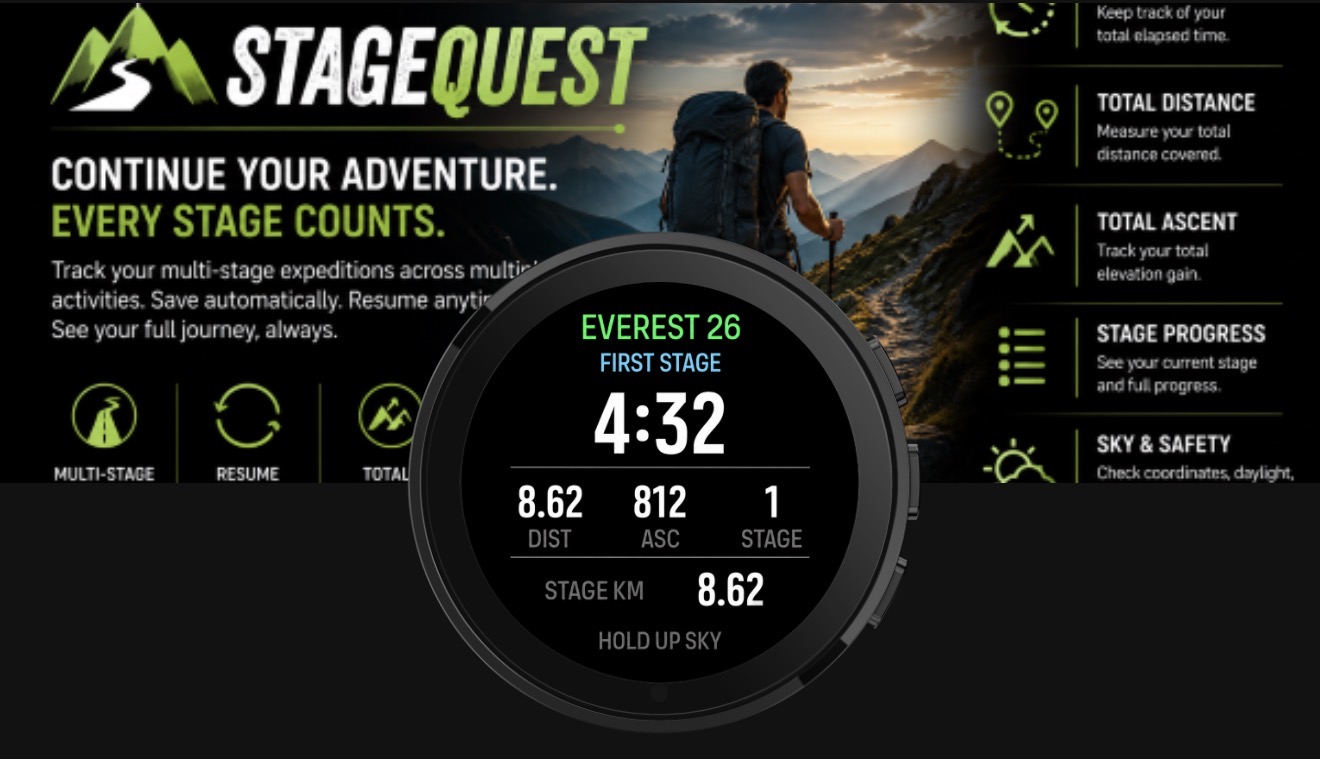
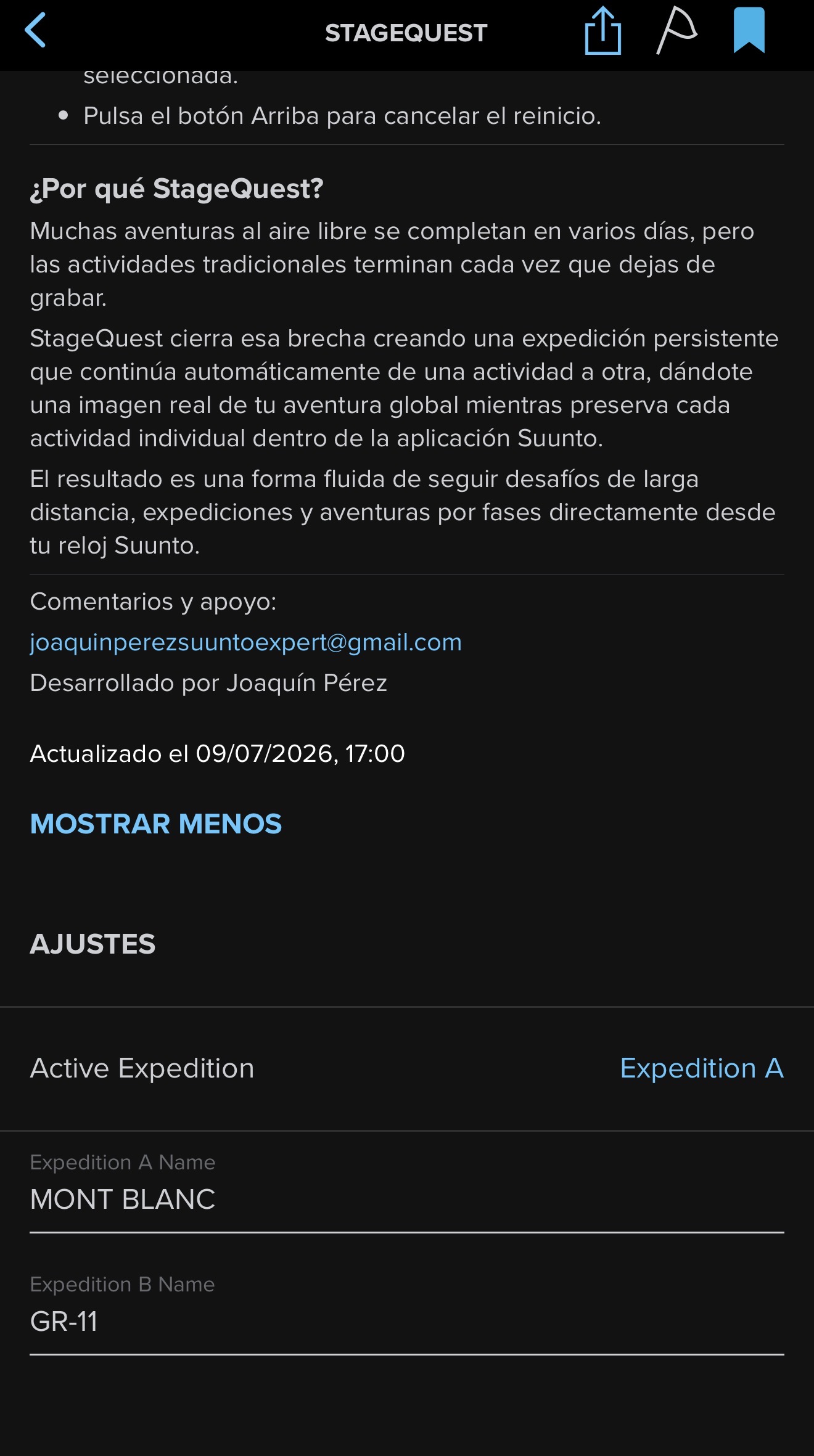
I’ve been working on a solution through a new SuuntoPlus
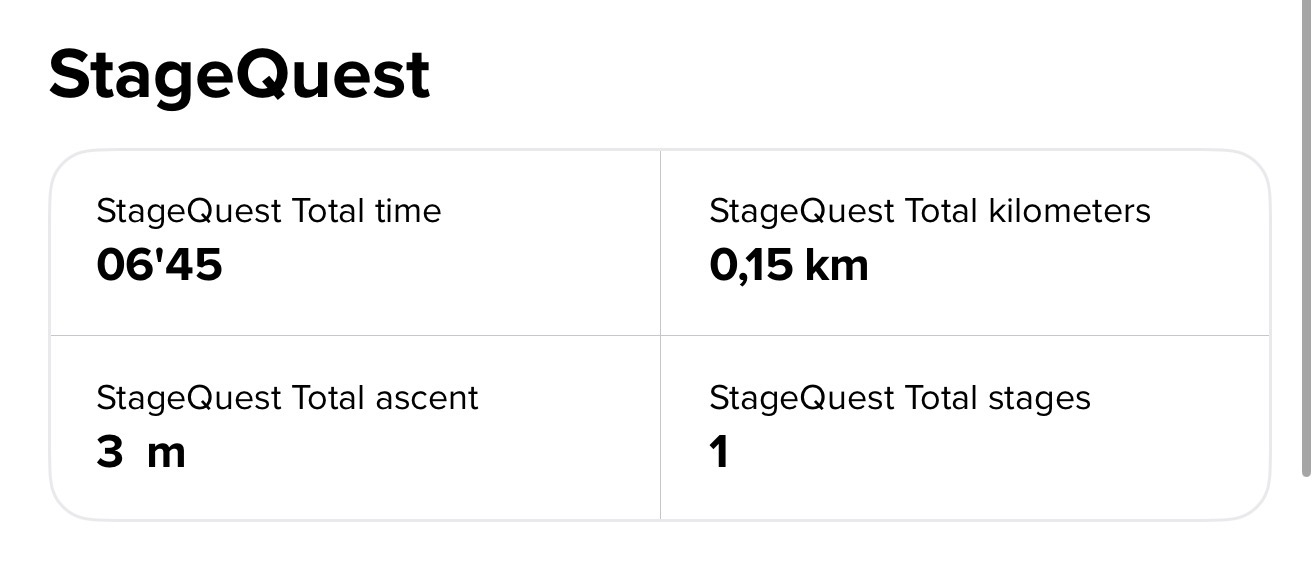
 Sports App, where users can create and manage two different adventures, each with a custom name. The app keeps the accumulated data for each adventure independently, allowing you to continue your progress across multiple activities.
It’s not a complete replacement for a true multi-day activity, and I’ll continue improving it, but it already allows us to keep track of the most important information from an adventure or expedition directly on the watch and in the Suunto App.
Stay tuned!
-
I don’t know. I don’t track sleep. (And an actual benefit for me is that that disables morning report.)
And what would be the worst that can happen when you loose some sleep tracking? It’s not that it’s very accurate. Or useful.
I’m sure others would disagree on the usefulness of sleep tracking. I do value knowing my overall sleep time, how low my HR got overnight, and the HRV results from sleep tracking, but “sleep stages” I put little weight on. In general, I think sleep tracking is a popular feature people look for in a device, and I imagine that’s one reason Garmin decided to make a dedicated Sleep Index Monitor for those who want that without wearing a bulky watch.
As for sleep tracking accuracy, one could argue that improving that would be a better use of Suunto developer resources than improving pause. Even dismissing sleep though, my earlier example of wanting to track a night swim session separate from an ongoing multi day bike tour seems like a reasonable thing, so Garmin’s inability to run a separate session while a current session is paused does seem to be a flaw in their design.
-
I know sleeptracking is super popular. Certainly on garmins, there are quite a few data collectors who collect data just for the purpose of collecting data. Or overquantify their lives.
For sleeptracking you are better off asking yourself in the morning, do I feel refreshed or still tired. That is a so much better indicator.
And like I said somewhere before, I don’t think the pause to resume later is much used on garmins (it has some bugs but I was the only one complaining about them) and you want to make it in an even smaller niche
Suunto t3c | Suunto Ambit 3 sport | Tomtom runner 2 | Garmin forerunner 935 | Garmin forerunner 965 | Suunto race s
Stryd | Bryton Gardia R300L | Polar H9 | Polar oh1+ | Wahoo bolt v2 | 4iiii precision 3 -
Instead of pausing an activity, allow someone to go to their exercise log, then choose to extend an existing saved session.
As soon as activity is saved it gets pushed to the cloud and other platforms such as Strava or Training Peaks. So this approach won’t work or it would become very complicated to manage.
Personally, when I owned Garmin have have never used “Stop and Resume Later” feature. Heck, I don’t even pause my watch except in rare cases. On Suunto I prefer to have raw data and on Strava I let Strava automatically remove stopped time (unless it is a race). And if a stop is extended, for example for lunch, I simply end activity and then start another. In a multi-day case, I definitely use separate activities for each day. I see an activity as a single effort as opposed to a single GPX track.
-
@elbee Let’s approach this another way; we can define two types of devices. A “sports watch” should simply record an activity/session and that’s it. A “smart watch” does additional things outside of activities.
As an example of the former device, my first GPS wrist device was a Garmin Forerunner 910XT and I’d call it a “sports watch” as defined above. I used it when I did my sessions, and turned it off completely and took it off my wrist when not in a session. It was simply too big and bulky to be used as a timepiece.
It seems that’s more in spirit with what you want, if you see features sleep tracking as a distraction, and feel Garmin has gone too far on extraneous non-activity features. If so, I’d submit Suunto’s current design, where when an activity is paused the device is effectively frozen, is more in the “sports watch” mindset. You’re either currently tracking an activity or you’re not. If you are paused and having lunch on a bike tour, then you likely have a smartphone with you, which can do all the minor non-sports things your Suunto device can do like checking the weather.
For my “sports watch” vs “smart watch” distinction, I do think asking to do anything other than activity tracking leads to a slippery slope of non-sports features, some of which we’d likely all agree are expected in 2026, and some of which we’d say are superfluous. I keep using “watch” and “device” here sort of interchangeably, because I do think simply telling the user the time is now considered a basic sports watch feature. Likewise, I think showing weather is non-controversial for most people, and we can see how it’s “sports related” and useful.
After that, things like music control, showing messages, showing calendar events, etc. can easily push into “smart watch” territory. I like to have music when I run, but can agree it’s not a basic sports watch features, and back in my 910XT days I had an iPod to accomplish this.
However, the area of “wellness” like tracking resting HR, sleep, and other non-activity but body-related aspects of our lives I think has slowly creeped into the “we expect this by default” area, pushing those feature more into “sports watch” rather than “smart watch” despite the fact the 910XT never did such things.
I’d suggest if Suunto’s current pause behavior were to change, so that you could do something else when paused, then the natural thing people would expect is “I should be able to do everything I could do before I started the activity,” so open any other widget/app on the device.
I’d say this should also include starting another session as that’s normal device behavior with the only stipulation being cannot have two activities paused so the secondary session would need to be properly ended before doing anything else. Effectively, the second session would gave the current “device is frozen on pause” behavior we have now.
So for a “purist, I want only a sports watch, not a smart watch,” I think the current pause ability is generally fine. It’s certainly not great for a smart watch though.
-
@elbee I appreciate the reasoned discussion. Another question, if you know, about Garmin — you mention you cannot run another activity while one is in pause/abeyance mode, but what about sleep? Is that tracking denied too?
The state of paused activity is frozen and stored in memory, GPS turned off, and the watch returns to normal operation. Sleep tracking resumes as normal.
-
@raven
I agree the lines of smart and sports watch are blurring together (in fact Suunto lists battery life for “Daily use: Smartwatch mode” in the battery specs on it’s site). I also agree Garmin has significant feature bloat so they can fill up the spec list on their website. I only used a subset of the features on my old garmin and appreciate Suunto’s cleaner approach. The set of features I describe in my original post here are part of the subset of features I frequently used on my garmin and miss on my Suunto.All these watches are designed for a broad audience and not everyone will use the watch in the same exact way or use every feature available. I did a lot of research before choosing the Vertical 2 but never even thought to check for these features (my fault) because they seemed basic enough to be universal. Going back and searching, I’ve found I wasn’t entirely wrong in thinking so as all the other big names (garmin, coros, amazfit) offer these features.
I posted here hoping Suunto would see it and consider adding these features to their roadmap to meet base feature parity with their competitors. Again these are basic features for me I used all the time, but maybe not used by others.
-
All these watches are designed for a broad audience and not everyone will use the watch in the same exact way or use every feature available. I did a lot of research before choosing the Vertical 2 but never even thought to check for these features (my fault) because they seemed basic enough to be universal. Going back and searching, I’ve found I wasn’t entirely wrong in thinking so as all the other big names (garmin, coros, amazfit) offer these features.
And Polar? It seems most closely aligned with Suunto than the others.
-
I still think it would be much easier – and therefore faster – to implement this in the SuuntoApp rather than in the watch software. You could achieve not only the same results but even more. Plus, you wouldn’t have all the limitations – sleep analysis, recovery, TSS, CTL, ATL, HRV, etc. You could also, for example, use different activities during a multi‑day trek – like swimming, climbing, or via ferrata – without having to deal with complicated activity session management or multisport mode.
Additionally, full freedom of sensor management between different parts of a multi‑day activity.
Reboot, update etc. between days etc.On top of that, it would be available to every user (like ZoneSense), not just those with the latest watches. And you wouldn’t have to pray that a crash doesn’t happen during such long and complex recorded activities.
You could also relatively easily group and combine selected activities into one final one, and then – like with any regular activity – export it automatically to other services, just as it currently happens at the end of every activity.
Especially since, in such a case, it’s really only about the total distance, elevation gain, duration, and a few less important stats like steps or calories. All the other statistics are far more useful on a daily (per session) basis for ongoing analysis.


Hello! It looks like you're interested in this conversation, but you don't have an account yet.
Getting fed up of having to scroll through the same posts each visit? When you register for an account, you'll always come back to exactly where you were before, and choose to be notified of new replies (either via email, or push notification). You'll also be able to save bookmarks and upvote posts to show your appreciation to other community members.
With your input, this post could be even better 💗
Register Login